Project Title: Strong Monitoring Organizations - to Improve the Election Environment
Project is implemented by: Financial Support of Elections Systems Development Reforms and Training Center
Project Duration: July - November, 2013
Representatives of Center for Development and Democracy (CDD) participated in the training about project cycle, which was held 16 - 19 July, in "House of Europe", with the joint initiative of EU and UN, supported by Confidence Building Early Response Mechanism (COBERM).

Centre for Democracy and Development (CDD) has been registered by the CEC (reg. decree № 194 16.07.2013) as local observer organization for presidential elections on October 27, 2013.

Project Title: Enhancing of Youth Involvement in the Election Processes
The project is implemented: in cooperation of the Council of Europe (CoE), and financial support from the Norwegian Ministry of Foreign Affairs.
Duration of the Project: July - November, 2013.
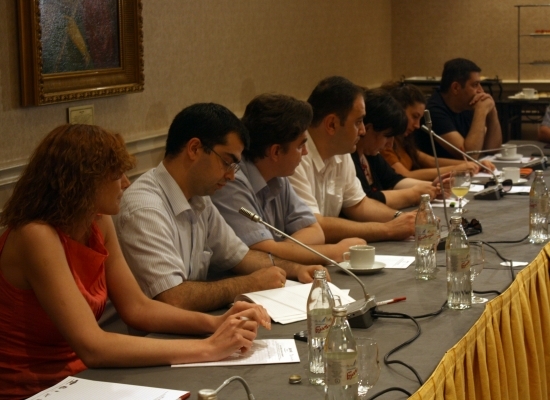
By the iniciative of the Central Election Commission with the support of the International Foundation for Electoral Systems (IFES) was held a meeting for the epresentatives of civil society and the media in the hotel "Tbilisi Marriott". The meeting was attended by the Chairman of the Center for Development and Democracy - Kate Chachava.

Due to celebrating the 237th Independence Day of the Unitaed States of America the US Embassy in Georgia hosted a reception for the representatives of the diplomatic corps, government, political parties, international organizations and civil society. Event was attended by the Chairman of the Center for Development and Democracy Kate Chachava.

The presidential elections will be held on Sunday, 27th of October - The head of the presidential administration, Mr Barnov announced after meeting with representatives of non-governmental organizations.
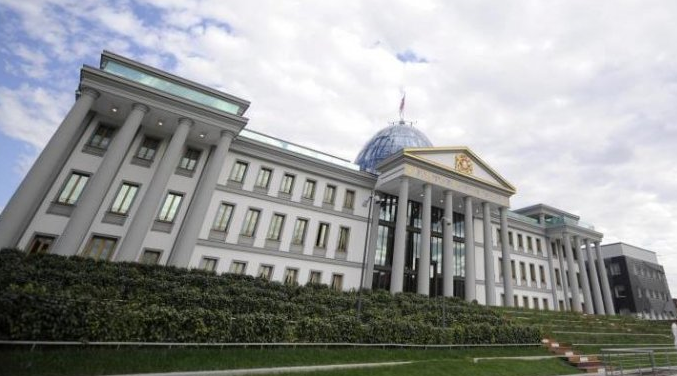
"We believe that the President should use his right to appoint the election date in the way to maximally encourage the activity of voters, both inside and outside the country, and ensure the possibility for the citizens to realize the right of voting."
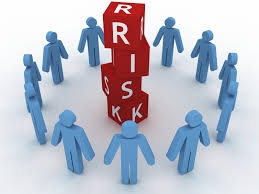
With understanding that Risk assessment provides a mechanism for identifying which risks represent opportunities and which represent potential pitfalls. Done right, a risk assessment gives organizations a clear view of variables to which they may be exposed, whether internal or external, retrospective or forward-looking. A good assessment is anchored in the organization’s defined risk appetite and tolerance, and provides a basis for determining risk responses. A robust risk assessment process, applied consistently throughout the organization, empowers management to better identify, evaluate, and exploit the right risks for their business, all while maintaining the appropriate controls to ensure effective and efficient operations and regulatory compliance. Risk assessment is a systematic process for identifying and evaluating events (i.e., possible risks and opportunities) that could affect the achievement of objectives, positively or negatively. Such events can be identified in the external environment (e.g., economic trends, regulatory landscape, and competition) and within an organization’s internal environment (e.g., people, process, and infrastructure). When these events intersect with an organization’s objectives—or can be predicted to do so—they become risks. Risk is therefore defined as “the possibility that an event will occur and adversely affect the achievement of objectives.”
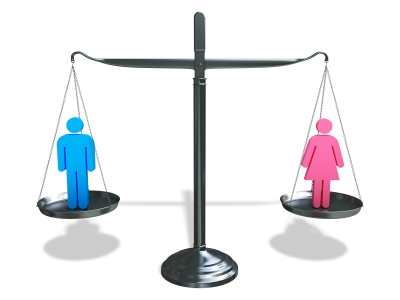
Goal of the policy paper is to support the achievement of equality between women and men to ensure sustainable development. CDD’s Internal Policy document on Gender Equality represents the main principles of the organization concerning the gender equality. Concrete activities and guidelines will be developed and included to support the implementation of the policy. Gender equity is the process of being fair to women and men. To ensure fairness, measures must often be available to compensate for historical and social disadvantages that prevent women and men from otherwise operating on a level playing field. Equity leads to equality. Gender equality means that women and men enjoy the same status. Gender equality means that women and men have equal conditions for realizing their full human rights and potential to contribute to national, political, economic, social and cultural development, and to benefit from the results. Gender equality is therefore the equal valuing by society of both the similarities and differences between women and men, and the varying roles that they play.